
Did you know you can paint upholstery with latex paint? All you need is textile medium to achieve a soft and durable finish!
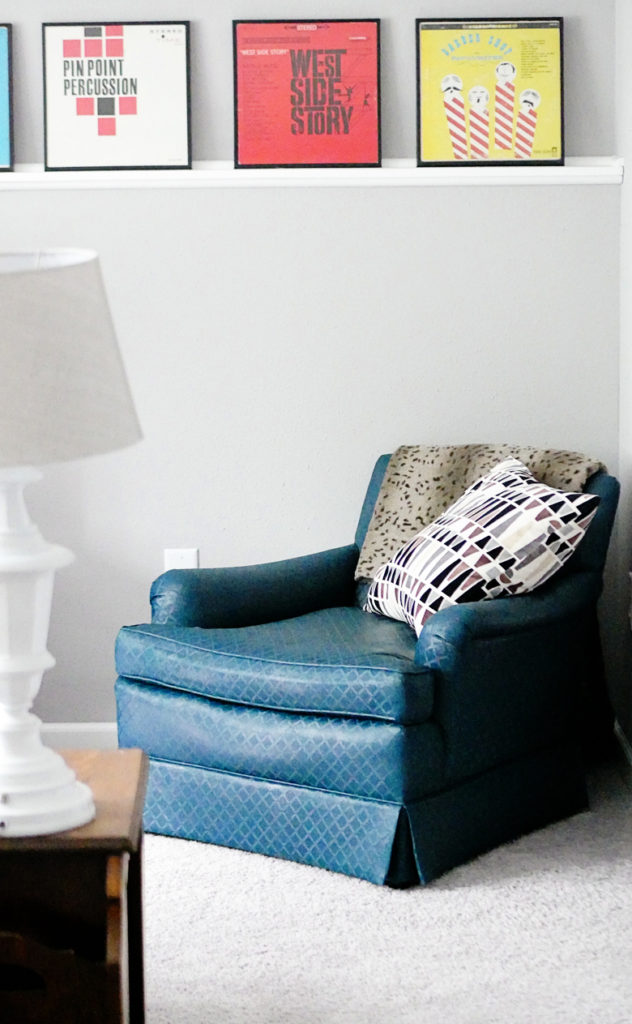
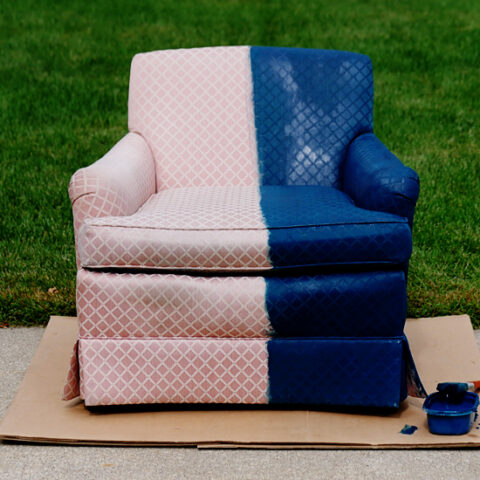
I painted this thrifted upholstered chair with regular latex wall paint.
And yes… it stayed soft.
I know! That was my reaction too! 😉
When I found this little chair at the thrift store for $4.99, it had great bones and a classic shape. But the fabric color? Not it. Reupholstering would’ve cost way more than the chair was worth, and I wasn’t ready to strip away its vintage character.

So I tried something I had seen floating around the internet for years: painting upholstery with latex paint.
It sounds like a recipe for a crunchy disaster. But when you mix latex paint with textile medium, it actually soaks into the fabric more like a dye instead of sitting on top like a coating.
The result? A completely transformed thrift store chair. Still soft, still usable, and now exactly the color I wanted.
Well worth the weird looks and visits from neighbors who couldn’t believe I was painting an upholstered chair with latex paint.
If you’ve ever walked past a perfectly shaped vintage chair just because the fabric was “wrong,” this might be the thrift flip trick you’ve been looking for!
Let me show you exactly how to paint upholstery with latex paint… the right way.
Why Paint Instead of Reupholster?
Reupholstering a chair like this can easily cost $200-$300.
This chair cost $4.99.
The frame was solid. The fabric wasn’t damaged, just outdated. I didn’t want to gut it. I wanted to revive it.
Sometimes DIY isn’t about replacing something completely. Sometimes it’s about preserving the shape and history of a piece while updating the color to fit your space.
Painting let me do exactly that.
How to Paint Upholstery With Latex Paint
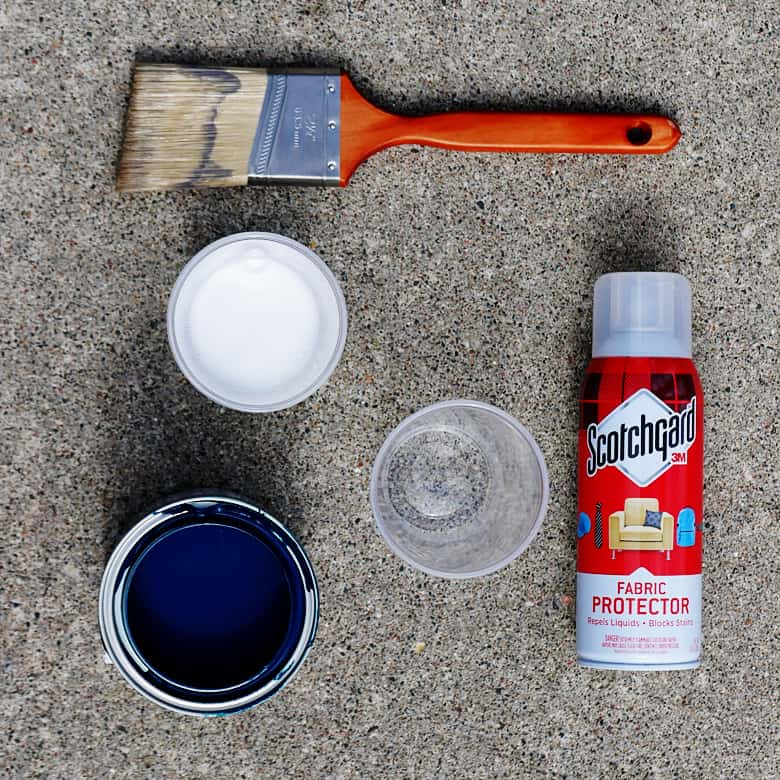
Materials You’ll Need…
- an upholstered chair with solid structure
- 1 quart satin latex paint (avoid gloss, it won’t look natural on fabric)
- 2 bottles of textile medium (this is what keeps the fabric soft, don’t skip it)
- Upholstery cleaner
- Fabric & upholstery protector
If you’re only investing in one “special” product for this project, make it the textile medium. That’s what transforms regular wall paint into something that behaves more like fabric dye.
Tools You’ll Need…
- Measuring cup (I used a disposable cup and marked a line on it)
- Mixing container
- Paint brush
- Fine grit sandpaper
- Rag
Step 1: Prepare the furniture
If you are transforming a thrifted piece of furniture as I am, let the chair air out for a few days in the garage.
Then, give it a good cleaning with some upholstery cleaner.
After that, vacuum it like crazy.
The piece was pretty clean to begin with (for a thrift store chair) but I wasn’t going to take any chances. It still had some dirt smudges from wear and tear, but I was hoping the paint would help me forget about that 😉
Step 2: Mix your latex paint and textile medium
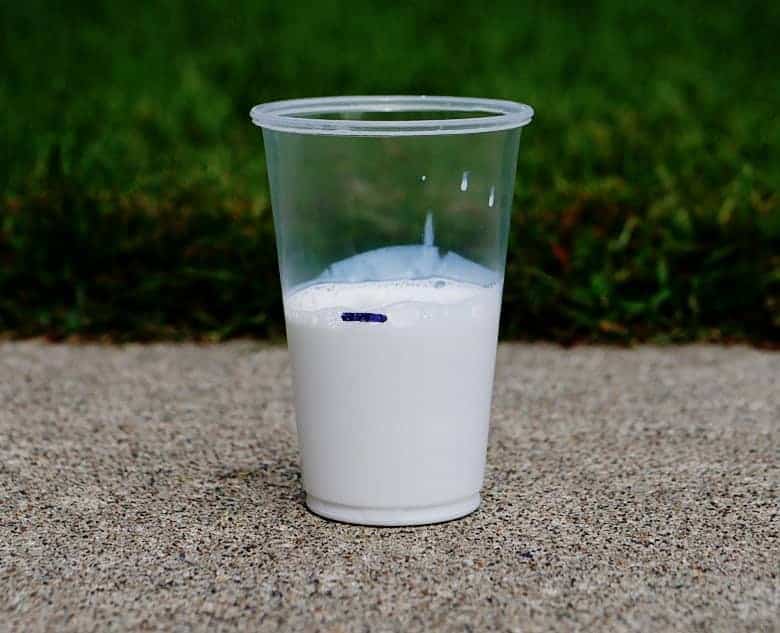
Mark a line on a disposable plastic cup to measure.
Mix 1 part textile medium to 2 parts latex paint.
The textile medium essentially waters it down and turns it into a fabric dye that will soak into the upholstery permanently.
I mixed mine together in a disposable container that I could just throw away when I was done with it (a deli meat container that I washed out, to be exact).

Step 3: Paint your furniture
Some tutorials recommend that you spray down the fabric with water before you start dying.
I did not. I forgot (oops).
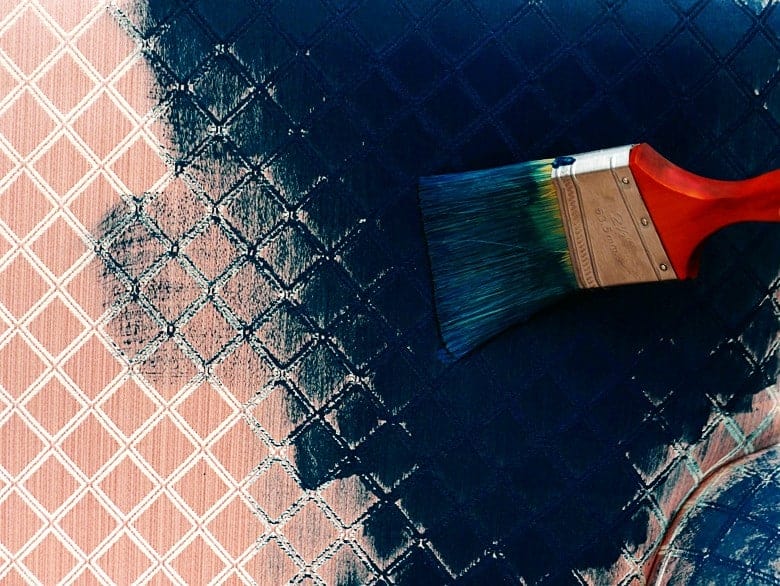
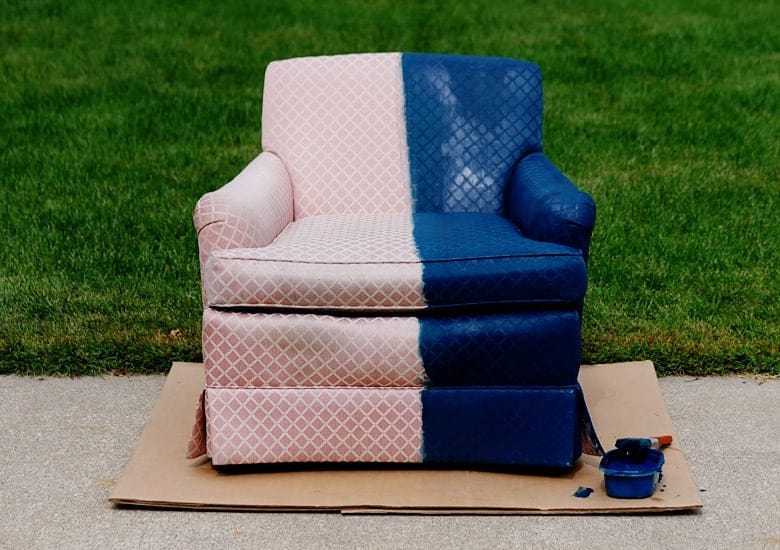
Apply a generous coat of the paint/textile medium mixture. You want the textile medium mixture to soak into the fabric just like a dye would.
Mine soaked in nicely despite my oops.
Let each coat dry thoroughly before adding additional coats. Because the color of my dye was pretty dark, I only needed to do one coat with a little bit of touch ups after it dried.
Step 4: Sand the furniture until it’s as soft as you desire
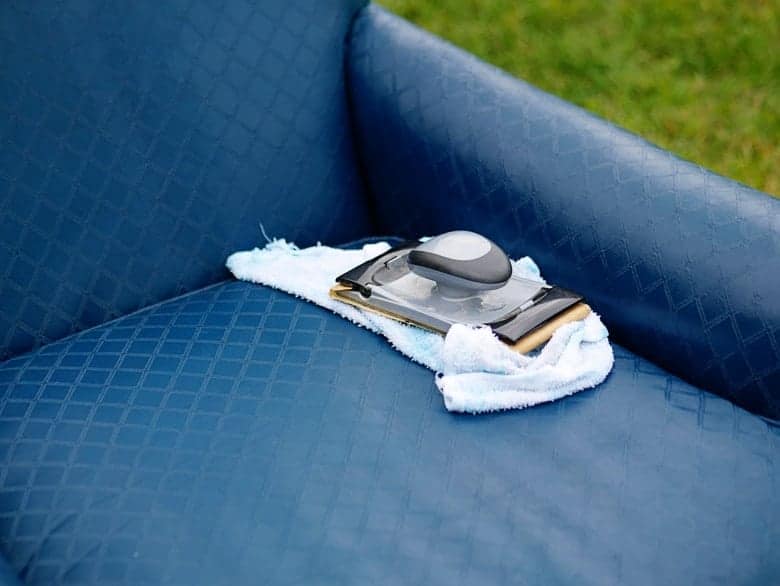
When all coats are very thoroughly dry, lightly sand with fine grit sandpaper and wipe down with a wet rag. This helps to soften the fabric even further.
I probably could have done without this step because it was already just as soft as it was before, but I tried it anyways.
Step 5: Protect your furniture
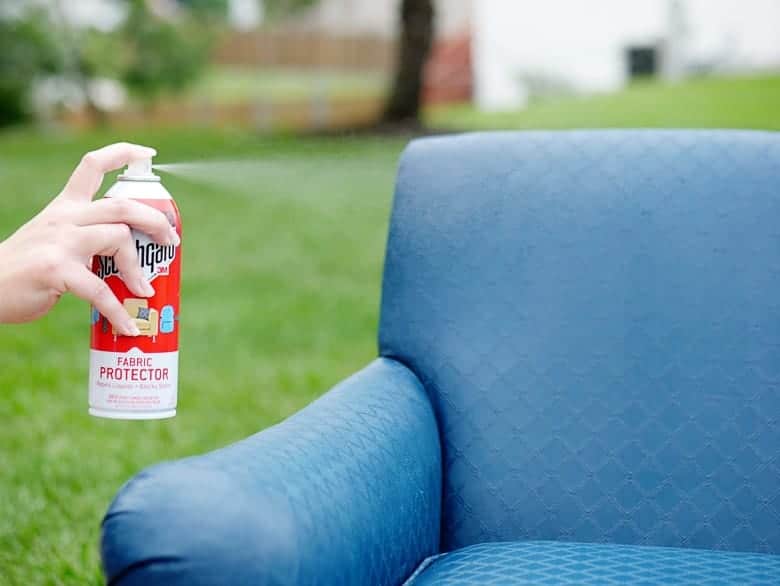
I finished it off with a fabric and upholstery protector to help repel spills, especially in a high-traffic space.
This chair is going in our “man cave” room where we hang out when we have people over. With how pretty the chair is now, I wanted to repel as many possible spills and stains as I could.
Does Painting Upholstery With Latex Paint Really Work?
I fully expected this to dry crunchy. Like cardboard.
But here’s what actually happened:
Once it dried completely, the fabric felt totally normal. Not stiff. Not chalky. Not plasticky.
The reason this works is the textile medium. That’s what allows the latex paint to soak into the fibers instead of sitting on top like a coating. It behaves more like a dye than a layer of paint.
Here’s what I noticed after it cured:
✔ No cracking
✔ No color transfer onto clothing
✔ No weird sheen
✔ No stiffness after light sanding
✔ It held up to regular sitting
I’ve had this chair in a high-traffic hangout space (aka where beverages are involved), and it’s held up beautifully.
Is this the solution for heirloom silk? No. But for a solid thrifted chair with good bones and dated fabric? Absolutely.
And the best part? I didn’t strip it. I didn’t reupholster it. It didn’t lose its vintage character.
I just gave it a new color and a second life.
Common Mistakes When Painting Upholstery
Before you grab a brush, here’s what NOT to do:
Skipping the textile medium: This is the exact textile medium I used and it’s what keeps the fabric from turning crunchy.
Using thick coats: Too much paint sitting on top will create stiffness. Thin, soaking layers are best.
Not cleaning first: Paint seals in dirt. Clean and vacuum thoroughly.
Choosing gloss paint: I recommend using a satin latex paint for the most natural finish.
Not letting it fully dry between coats: Patience prevents texture issues.
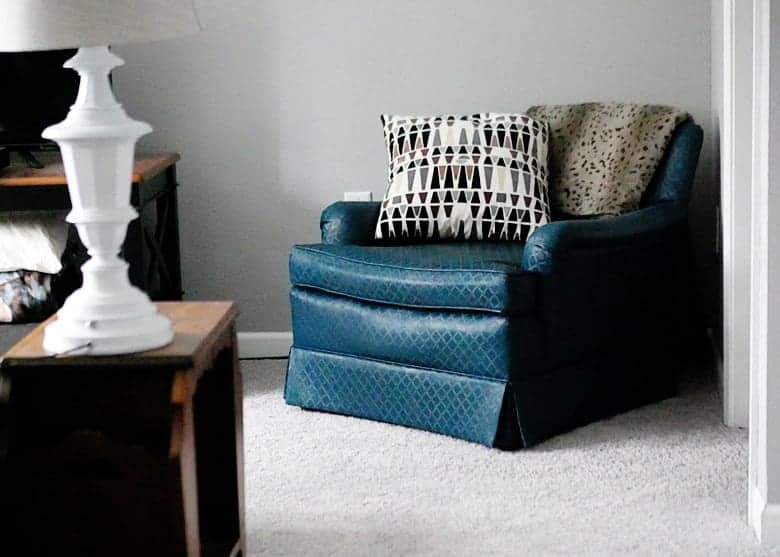
For a $4.99 chair, I think it looks pretty darn spiffy now! It fits perfectly into the corner of our man cave for additional seating when we have company over.
Cost Breakdown: $4.99 Chair Makeover
$4.99
Thrifted chair
~$10
Latex paint (portion used)
~$15
Textile medium
~$13
Fabric protector
Total Approximate Cost: $40–$45
Reupholstering a chair like this? That could easily cost you a couple hundred bucks.
That’s a serious difference.
Want More Thrift Store Makeovers and DIYs?


How to Paint Upholstery with Latex Paint
Materials
- Thrift Store Chair
- Latex Paint
- Textile Medium
- Upholstery Cleaner
- Scotchguard Fabric Protector
Tools
- Measuring Cup
- Mixing Container
- Paint Brush
- Fine Grit Sandpaper
- Rag
Instructions
Step 1: Prepare your chair
- Let your chair air out in your garage for 24 hours after bringing it home from the thrift store
- Give it a good clean with your desired upholstery cleaner of choice
- Vacuum your chair like crazy
Step 2: Mix your paint
- Mix together 1 part textile medium to 2 parts latex paint in your mixing container
Step 3: Paint your chair
- Optional: spray the upholstery down with water so that the paint soaks in thoroughly
- Paint your chair using a thick coat of the paint/textile medium thoroughly. The paint should soak in like dye.
- Repeat as needed until your upholstery is fully covered.
Step 4: Sand down your chair
- Using the fine grit sandpaper, sand down your chair until it's as soft as desired.
- Wipe away any dust with a wet rag.
Step 5: Protect your chair
- Refer to the directions on the bottle of Scotchguard and give it a coat to protect it from any future spills.
This shop was compensated by Collective Bias, Inc. and its advertiser. All opinions are mine alone.




Just wondering what textile medium you used and how much to paint ratio?
I have a love seat that is peeling and want to paint. Will this paint work on that type of material?
I personally would not do this technique on a material that is peeling.
Would it be possible to paint over another color that was previously painted on to an upholstered chair?
Good question, personally I don’t think the results would be as nice as multiple layers will start to get stiff.
Have you ever noticed a separation or reaction of the paint and medium? I’m using camel latex paint and as it sits in the paint pan I get a navy blue “float” on the paint. It did leave a blue shadow on the off white fabric after the first coat, but does not seem to show after the second coat. Just curious.
And so far thrilled with results; it is looking like a very nice leather and I haven’t yet waxed it. Thanks for your help!
How did you do cushion?
Both sides and under cushion
I did the top of the cushion, sides, and then a little to wrap under the bottom. Just to make sure nothing un-painted poked out if someone was sitting in it.
What about liquids, sweat and spills? I want to paint an antique chair we’d use in our living room. I have kids and pets and plenty of guests circulating through the house. When any sort of liquid touches the paint, would it transfer or bleed onto them or their clothing ?
I have spilt water on this as a test and rubbed with a white towel to see if anything came up and it was clean. Granted, this chair gets light use so I am unsure if it were to get heavy use if the results would vary.
Must the fabric be lighter than what you’d like your finish color to be?
Not necessarily, but the darker the furniture before and the lighter you are hoping for the after the more coats of paint you would need and the stiffer the fabric could end up.
Hi, the link to the textil medium is not working, so i just wanted to know, what kind of product this is, since i live in Germany and have probably different products around here anyway, so i would need to find an alternative.